
Understanding Private Credit's Economic Impact: 6.5 Million Jobs Supported
Private credit has expanded steadily as a source of capital for American businesses, and new figures from the Managed Funds Association (MFA) help measure that role with precision.
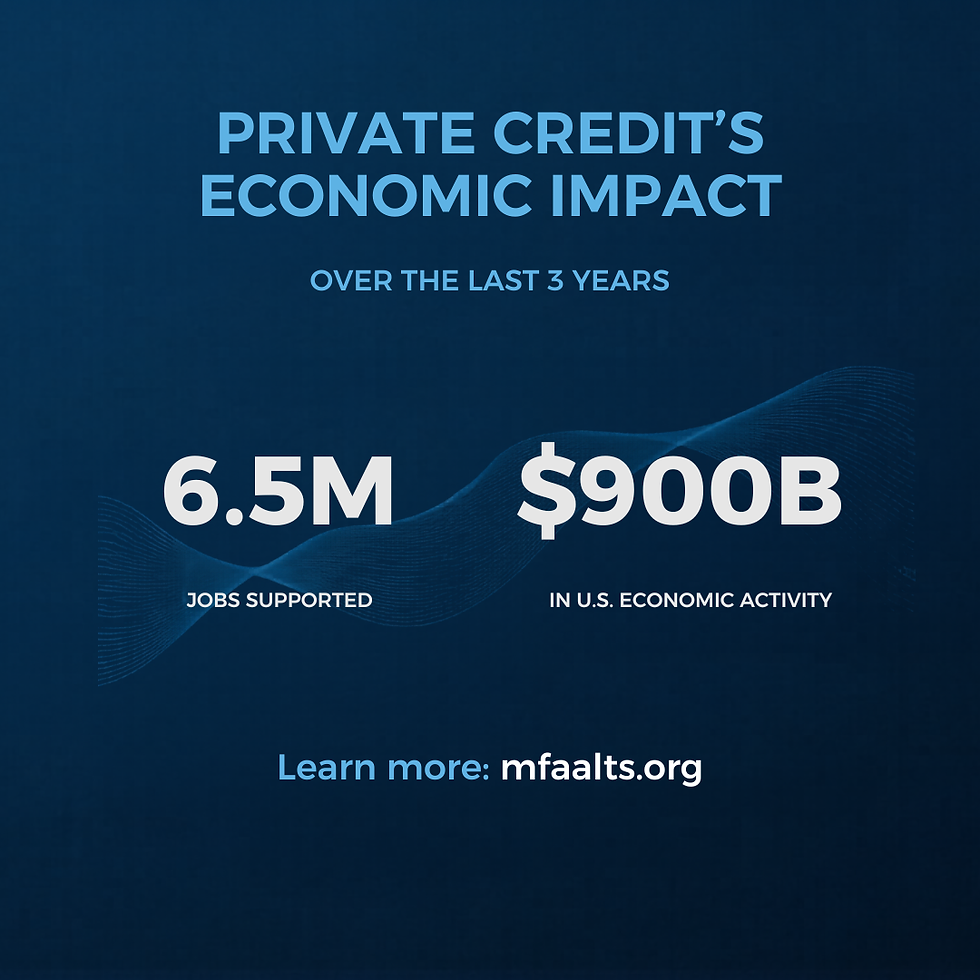
According to MFA, private credit has supported an estimated 6.5 million jobs and contributed nearly $900 billion in U.S. economic activity over the last three years. Taken together, these figures define private credit's economic impact at a national scale.
The mechanism is straightforward. Traditional bank lending plays a central role in the financial system, but it cannot always meet the needs of businesses requiring speed, flexibility, or financing in situations where conventional bank capital is unavailable. Private credit provides an additional channel of capital in those cases, complementing bank lending rather than replacing it.
That complementary function carries through to the wider economy. By extending financing where it might otherwise be constrained, private credit helps businesses maintain operations, invest, and expand, outcomes reflected in MFA's jobs and activity figures.
For context on the size and structure of the market, MFA's research provides a useful overview: mfaalts.org/industry-research/private-credit-direct-lending-faqs/



Comments